

The Benefits of Adding an Accent Wall to a Room
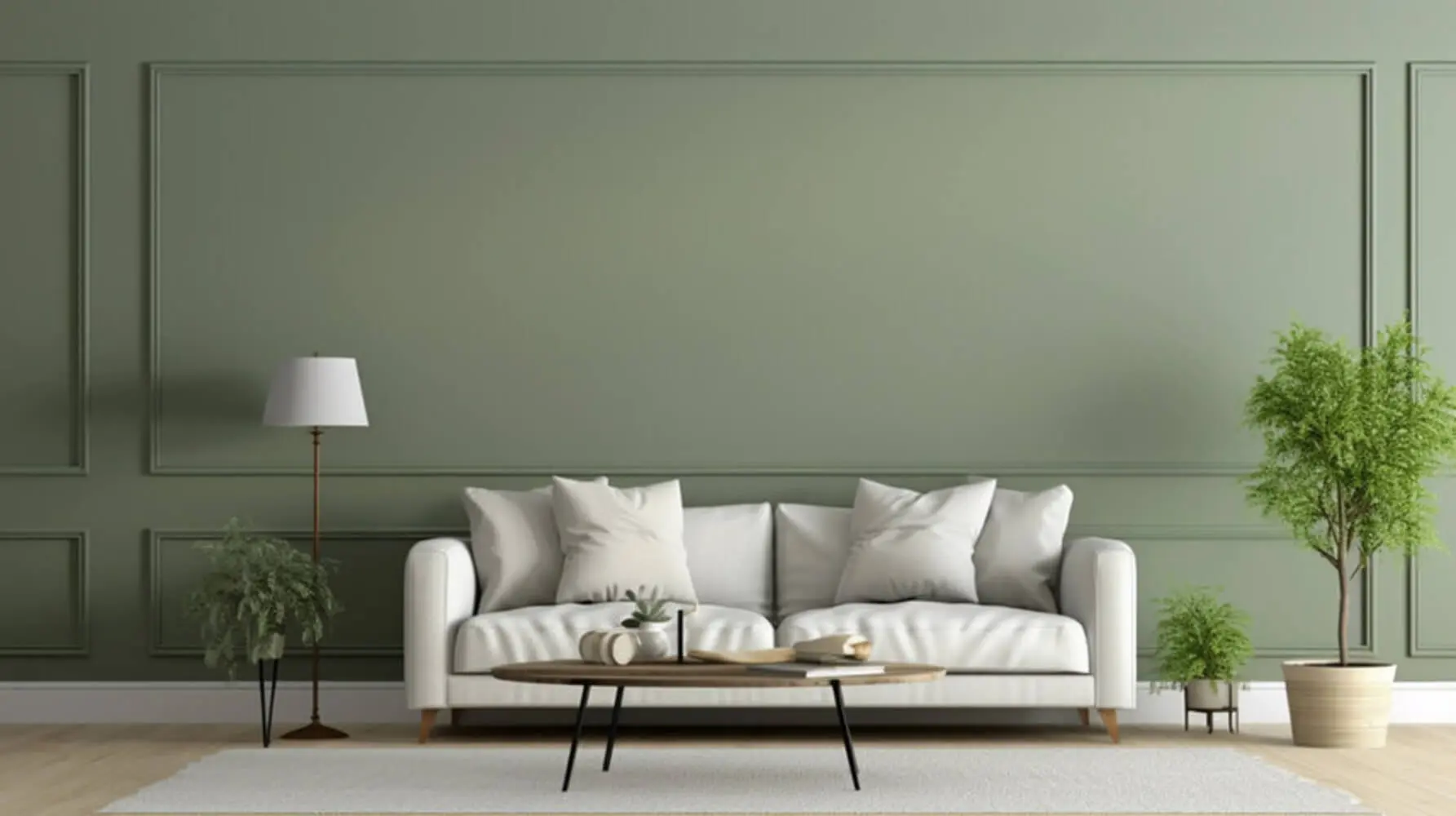
If you’re thinking about refreshing a room but hesitating on a full repaint, you’re not alone. A full-room repaint takes real time, real cost, and real disruption to your daily routine. An accent wall offers a smaller-scale option that can still make a genuine difference.
This guide walks through what an accent wall actually does for a room, when it makes more sense than repainting everything, and how to choose the right wall and colour if you decide it’s the right fit for your space.
Accent Wall or Full Repaint? Why a Single Wall Can Be Enough
An accent wall can transform how a room feels without the cost, time, or disruption of repainting every wall.
A single wall requires far less paint, less prep, and less time than an entire room. That means you can see a real visual change in an afternoon rather than committing to a multi-day project. A full-room repaint typically means moving furniture out of every corner, taping off every baseboard, and living with the smell and mess of paint for days at a time. An accent wall project scales all of that down to one section of one room.
This isn’t a lesser version of a full repaint. It’s a different kind of update, one that concentrates impact into a single focal point instead of spreading a subtler change across every surface. A full repaint changes the overall tone of a room evenly, while an accent wall creates a specific point of interest that anchors the whole space around it. Understanding this distinction helps you see an accent wall as a legitimate option on its own, not just a smaller version of a bigger project.
There’s also a practical budgeting benefit worth considering. Since an accent wall uses a fraction of the paint and labour a full room requires, it frees up room in your budget to choose a premium paint or finish you might not splurge on for four entire walls. A higher-end paint with a richer pigment or a specialty sheen becomes much more affordable when it’s only covering one wall instead of the whole room.
The Benefits of Adding an Accent Wall to a Room’s Focal Point and Depth
A well-placed accent wall gives a room a clear focal point. It also makes the space feel more dimensional than a single flat colour scheme ever could.
When every wall matches, your eye has nowhere specific to land. A contrasting wall naturally draws attention and anchors the room around a defined feature instead. This matters more than it might seem. A room without a clear focal point can feel visually flat, even if the furniture and decor inside it are genuinely well chosen. An accent wall gives the eye somewhere to rest, which makes the whole space read as more intentional and put together.
The effect changes depending on the colour you choose:
- A darker accent wall makes a room feel more intimate and layered, since deeper tones tend to visually pull a wall closer
- A lighter or brighter accent energizes a space without overwhelming it, especially in rooms that already get plenty of natural light
- A textured or two-tone accent wall adds dimension through more than colour alone, which works well in rooms where you want extra visual interest without going too bold
This is real design work, not just decoration, and it matters even more once a room needs to serve multiple purposes at once. A living room that doubles as a reading nook, a home office, and a space for entertaining benefits from having a defined anchor point, since it helps the room feel organized even when its function changes throughout the day.
The direction a room faces also plays a role here. Rooms with cooler, north-facing light often benefit from warmer accent tones that add a sense of coziness the natural light doesn’t provide on its own. Rooms with generous south-facing light can support deeper, richer tones without feeling closed in, since the extra daylight balances out a darker wall’s visual weight.
Using an Accent Wall to Define Open-Concept Spaces
In an open-concept layout, an accent wall can visually separate one area from another without adding a physical divider.
Many Whitby homes feature open living and dining spaces that flow directly into one another. Without any visual cues, these areas can start to feel like one undefined room rather than two distinct spaces. Open-concept layouts offer real advantages: more natural light, easier movement between rooms, and a more social, connected feel. But that same openness can also make a space feel a little unstructured, especially when every surface is painted the exact same colour from one end to the other.
Painting the wall behind a dining table, or the wall anchoring a living room seating area, gives each zone its own visual identity. Your layout stays open, but each space still feels intentional and defined. Here are a few common ways homeowners use this approach in open-concept homes:
- Accenting the wall behind a dining table to give the eating area a clear sense of place
- Painting the wall behind a sofa or media console to anchor the living room zone within a larger open space
- Using a bolder accent on a wall near a kitchen island to separate the cooking area from adjacent living space, without needing a wall or partition
This is exactly where the focal-point effect described above solves a real, practical problem many local homeowners already face in their own layouts.
It’s also worth thinking about how the accent wall interacts with sightlines through the home. In an open-concept space, you’re often looking at more than one room at a time, whether that’s from the kitchen into the dining area or from an entryway into the main living space. A well-placed accent wall gives your eye a clear point to land on from multiple angles, which helps the whole layout feel cohesive rather than like several rooms competing for attention.
A Low-Risk Way to Experiment with Bolder Colour
An accent wall lets you try a bolder colour you wouldn’t want to commit to on every wall, with far less risk if it doesn’t work out.
Choosing a bold accent colour can feel like a big design risk. But because the colour is contained to one wall, the actual downside of trying it stays small. If a colour doesn’t feel right, repainting one wall again is a quick, inexpensive fix, especially compared to redoing an entire room’s worth of paint.
This reassurance is often what turns hesitation into action for homeowners who like the idea of an accent wall but feel nervous about picking the wrong colour. It also means you can be more adventurous than you might otherwise be. A deep emerald green, a moody charcoal, or a rich terracotta might feel like too much of a commitment across four walls, but on a single wall, that same colour can add exactly the kind of personality and warmth a room was missing.
This low-risk quality also makes an accent wall a great way to test out a colour before deciding whether to use it elsewhere in your home. If a bold shade works well as an accent, it can inform choices for a future project, whether that’s trim, an adjoining room, or even furniture and decor. If you’d like expert input before committing to a shade, a colour consultation takes that guesswork off your plate entirely.
Choosing the Right Wall to Accent
The best wall to accent is one that naturally draws the eye. Think about the wall behind a bed, a fireplace, or a dining table, rather than one broken up by doors and windows.
A wall interrupted by openings fragments the visual effect. A solid, uninterrupted wall lets the colour or texture read as one cohesive statement instead. Doors, windows, and other breaks in a wall pull the eye in multiple directions at once, which works against the whole purpose of creating a single, clear focal point.
In a multi-purpose or open-concept room, this often means the wall anchoring a specific zone, such as a dining or seating area. A few other signs a wall is a strong candidate:
- It’s the first wall you see when entering the room
- It sits behind a piece of furniture or an architectural feature you want to highlight
- It has few or no doors, windows, or built-ins breaking up its surface
It’s also worth thinking about ceiling height and wall proportions when making this choice. A tall wall in a room with high ceilings can handle a bolder or darker colour without feeling heavy, while a shorter wall might benefit from a lighter tone that keeps the space feeling open. Choosing the right wall is what makes the difference between an accent that feels intentional and one that feels arbitrary.
Choosing a Colour That Complements the Rest of the Room
The strongest accent walls work with a room’s existing furniture, flooring, and decor. They don’t clash against them.
A bold colour chosen in isolation can look striking on its own. But it can also feel disconnected once it’s surrounded by the room’s other elements. A colour that looks stunning on a paint chip or in an online photo doesn’t always work the same way once it’s on your actual wall, next to your actual furniture and lighting.
Pulling a colour that echoes an existing accent in the room, such as a rug, artwork, or furniture piece, helps the wall feel like part of a cohesive design. This is what separates an accent wall that looks professionally considered from one that feels like an afterthought.
Testing a sample directly on the wall you’re planning to accent, and viewing it at different times of day, is one of the simplest ways to avoid a mismatch. Natural light shifts considerably between morning and evening, and a colour that looks perfect at noon can read completely differently once the sun goes down and artificial lighting takes over. If you’re weighing a bold accent against sticking with an all-neutral palette, it’s worth reading whether white interior walls are still in style before you decide, since the right choice often depends on how much contrast the rest of your room already has.
A Small Change That Makes a Real Difference
An accent wall offers real, noticeable transformation without the cost, time, or commitment of repainting an entire room.
Whether your goal is creating a focal point, defining an open-concept space, or simply trying a bolder colour with less risk, a single wall can accomplish exactly what you’re looking for.
If you’re considering an accent wall for your space, our accent wall painting services can help bring the idea to life. Reach out through our contact page to talk through your space and get a quote. This is just a conversation to help you explore your options, not a commitment.